

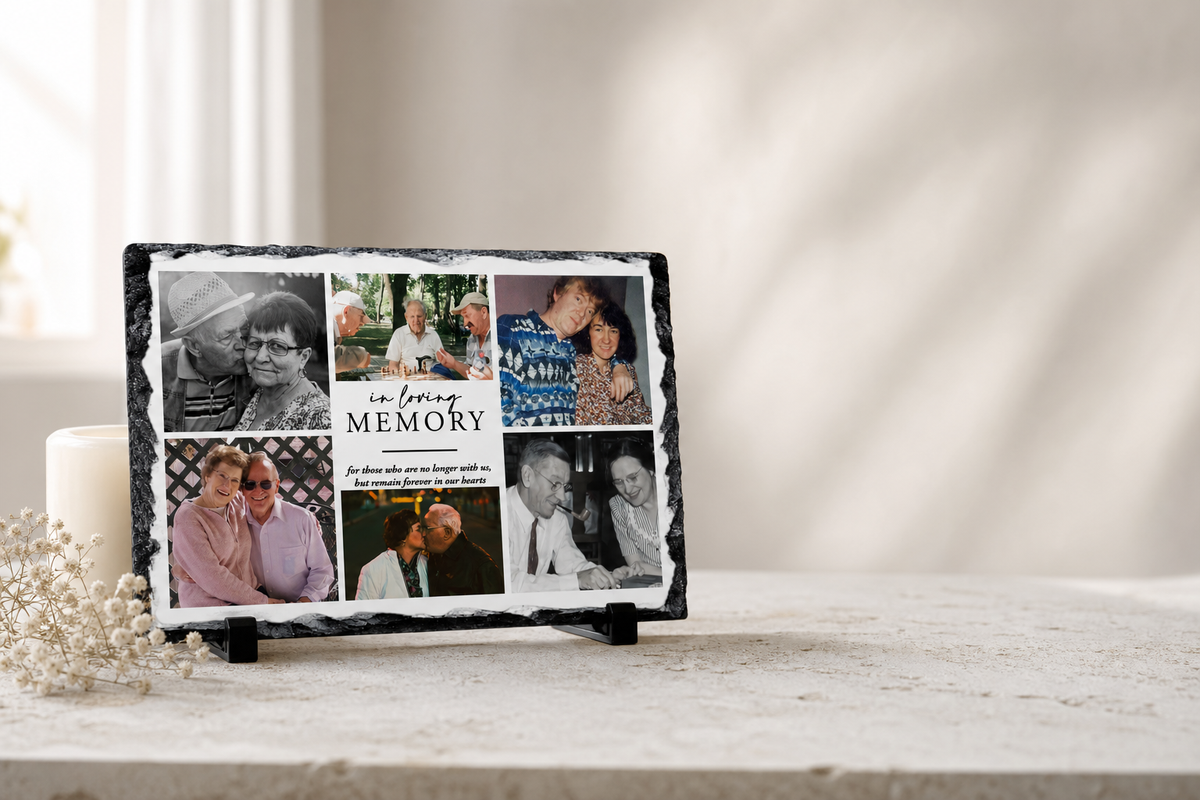
A memorial plaque typically carries a name, dates, and one or two lines of personal wording, such as a short quote, a relationship reference, or a simple statement of love. Most plaques work best with 10 to 40 words in total. Beyond the name and dates, the most effective wording is specific to the person, not borrowed from a generic template.
What are the essential elements to include?
Start with these three building blocks, then decide what else fits:
- Full name, or the name the person was known by. Both work. "John Edward Harris" and "Dad" are equally valid.
- Dates, usually birth and death years as a span, for example 1942 to 2023. Some people prefer just the birth year with "Forever in our hearts" in place of the death date.
- One or two lines of personal wording. This is the part most people struggle with, and the rest of this guide focuses on it.
What kind of wording works well on a memorial plaque?
There are broadly four approaches. Pick one and keep it consistent in tone.
1. A relationship statement
Short and direct. These work well when the plaque is given within a family.
- "Beloved wife, mother and grandmother"
- "Our dad. Gone but never forgotten."
- "Brother, friend, and the funniest person in the room."
The last example shows that you do not have to be solemn. If the person was known for their humour, say so.
2. A short quote or verse
Quotes can come from a poem, a song the person loved, a religious text, or something they said themselves. Keep it under two lines on the plaque.
- "Those we love don't go away, they walk beside us every day."
- "Do not stand at my grave and weep" (opening line of Mary Frye's poem, widely used and recognisable).
- "Up where the skies are blue" (if the person was a keen walker or had a connection to the outdoors).
If you are quoting something the person actually said, use quotation marks and attribute it: "'Life's too short for bad tea.' Our nan, who was right."
3. A personal memory or characteristic
This is the approach that produces the most individual plaques. It takes a little more thought but the result is something that could only be about that person.
- "The one who always had the kettle on."
- "She grew roses and grew kind people."
- "Fifty years of Sunday roasts, and every one was worth it."
You are not writing a biography. One detail, well chosen, does more than a list of qualities.
4. A simple statement of love or remembrance
Sometimes plain is right. These are short enough to stand on their own, and they do not try to do too much.
- "Forever loved."
- "In loving memory."
- "Always with us."
- "Missed every single day."
What should you write on a memorial slate specifically?
Slate is a popular choice for memorial gifts because the engraving is permanent and the material weathers well in a garden. Our personalised memorial slates are made to order and can carry a photograph alongside the text, which changes how you approach the wording. If there is a photo, the image carries much of the emotional weight and the text can be shorter: name, dates, and one short line is usually enough.
If there is no photo, you have more space for words. A medium slate comfortably holds around 50 to 80 characters of text beyond the name and dates without looking cluttered. Go beyond that and the font size drops, which can reduce legibility.
What should you write on a memorial plaque for a pet?
The principles are the same: name, dates if known, and one line that is specific to that animal. "The best boy" is widely used because it works. "Thirteen years of muddy paws and no regrets" works too, and is more individual. You do not need to be more formal for a pet than you would for a person. Browse our personalised pet gifts if you are looking for a keepsake for an animal.
What wording should you avoid?
A few things to watch for:
- Clichés that feel hollow. Phrases like "taken too soon" or "an angel in heaven" are not wrong, but they say little about the individual. If that is genuinely what feels right, use it. If you are reaching for it because nothing else comes, keep thinking.
- Too many lines. More than three lines of text, plus name and dates, is usually too much. Edit until only the essential remains.
- Mixed tones. A funny opening line and then a solemn religious verse can feel at odds. Pick one register and stay in it.
- Spelling errors. Read the wording aloud before you submit it. Check every name and date twice. On a permanent plaque there is no going back.
How do you write wording for a memorial frame or photo gift?
A photo frame memorial gift is usually displayed inside and tends to carry a photo prominently, so the text is often shorter than a garden plaque. One line beneath the name, or even just the name and years, is common. Our personalised memorial frames let you add your own photo and wording, so the combination of image and text does the work together.
For a full range of options, including slates, frames, and other keepsakes, see our personalised memorial gifts collection.
Frequently asked questions
How many words should you put on a memorial plaque?
Most plaques carry between 10 and 40 words of personalised text, not counting the name and dates. Shorter is usually stronger. If you can say it in one line, say it in one line.
Can you include a photo on a memorial plaque?
Yes. Photo slates and memorial frames from Scottsy can include a photograph alongside the engraved or printed text. If you include a photo, keep the wording brief as the image carries much of the meaning.
Is it acceptable to use humour on a memorial plaque?
Absolutely. If the person was known for their wit, a light or funny line is often more fitting than a formal one. The wording should reflect who they actually were.
What fonts or layouts look best on a memorial slate?
Clean, legible fonts work best on engraved or printed slate. When you order from Scottsy, you choose your wording and we handle the layout. If you are unsure, keep the text short and let the maker position it well.
Do you have to include the death date?
No. Some families prefer just the birth year, or a phrase like "Forever with us" in place of the death date. It is a personal choice, and both approaches are common.

Leave a comment
This site is protected by hCaptcha and the hCaptcha Privacy Policy and Terms of Service apply.